
在前一篇文章中,我們已經學習了字典的基本操作,包括新增、刪除、修改與查詢。這些功能讓我們能夠快速上手並使用字典處理資料。
然而,Python 的字典還有許多進階用法,例如字典推導式、鍵與值的提取方法、同時遍歷鍵值對,以及如何使用嵌套字典來表示更複雜的資料結構。
這些技巧不僅能提升開發效率,還能幫助你在面對真實專案時,寫出更乾淨且更容易維護的程式碼。
字典推導式
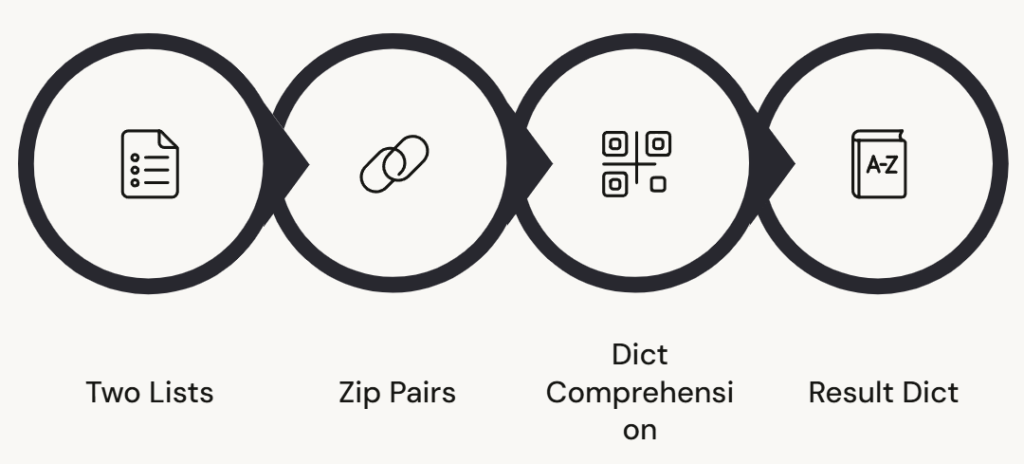
字典推導式(Dict Comprehension)是一種簡潔創建字典的方式,特別適合當你有兩個相關的列表需要組合成字典時。
names = ['小明', '小花', '小華', '小美']
heights = [170, 165, 180, 160]

# 使用字典推導式創建字典
students = {key: value for key, value in zip(names, heights)}
# 結果: {'小明': 170, '小花': 165, '小華': 180, '小美': 160}
這種語法簡潔且富有表現力,是 Python 編程中的一大特色。
獲取字典的所有鍵
在處理字典時,我們經常需要獲取所有的鍵。Python 提供了幾種方法:
使用 keys() 方法
test_scores = {"小明": [80, 72, 90],
              "小花": [88, 68, 81]}
keys = test_scores.keys()
# 返回 dict_keys(['小明', '小花'])
keys() 返回一個 dict_keys 對象,這是一個動態視圖,反映字典的當前狀態。
使用 list() 函數
keys_list = list(test_scores)
# 返回 ['小明', '小花']
使用 list() 函數可以將鍵轉換為列表,便於進一步處理。
遍歷字典的鍵
for student in test_scores.keys():
    print(student)
# 輸出:
# 小明
# 小花
dict_keys 對象可以直接用於迭代,無需轉換為列表。
獲取字典的所有值
與獲取鍵類似,我們也可以獲取字典中的所有值:
使用 values() 方法
test_scores = {"小明": [80, 72, 90], "小花": [88, 68, 81]}
values = test_scores.values()
# 返回 dict_values([[80, 72, 90], [88, 68, 81]])
遍歷字典的值
for score_list in test_scores.values():
    print(score_list)
# 輸出:
# [80, 72, 90]
# [88, 68, 81]
注意: values() 返回的是一個 dict_values 對象,這是一個動態視圖,可以直接用於迭代,但不能像列表那樣進行索引或切片操作。
如果需要將值轉換為列表,可以使用:
values_list = list(test_scores.values())同時獲取鍵和值
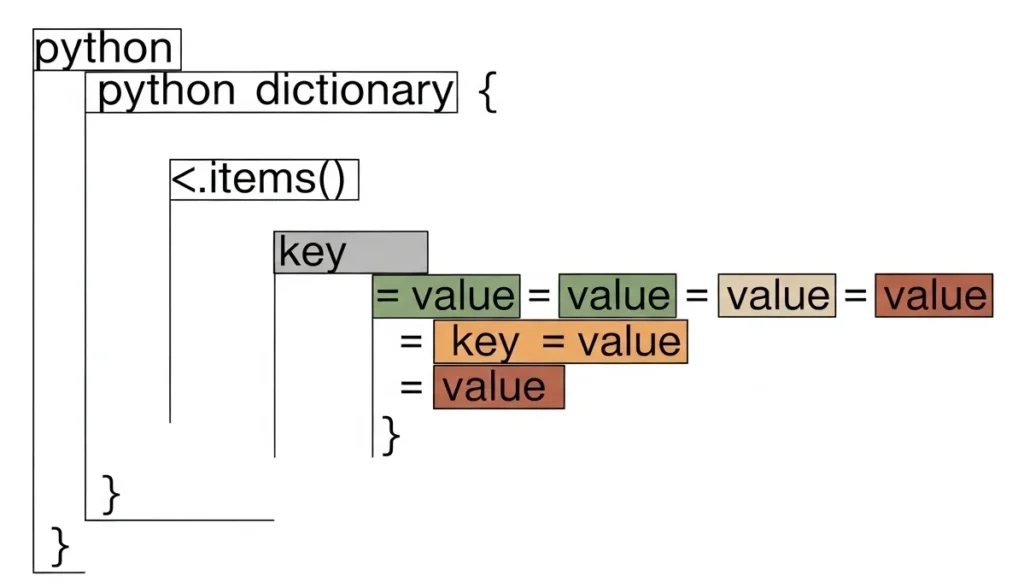
使用 items() 方法可以同時獲取字典的鍵和值:
biggest_brands = {
    "蘋果": 184,
    "谷歌": 141.7,
    "微軟": 80
}

for company, value in biggest_brands.items():
    print(company + " 的價值為 " + str(value) + " 十億美元。")
輸出:
蘋果 的價值為 184 十億美元。
谷歌 的價值為 141.7 十億美元。
微軟 的價值為 80 十億美元。
items() 方法返回一個 dict_items 對象,其中每個元素是一個 (key, value) 形式的元組。
這種方法特別適合需要同時處理鍵和值的情況,使代碼更加簡潔。
字典的嵌套
字典可以包含其他字典作為值,創建多層次的數據結構,適合表示更複雜的關係。
# 學生信息系統
students = {
    "小明": {
        "年齡": 17,
        "成績": {"數學": 95, "語文": 88, "英語": 90},
        "聯絡方式": {"電話": "0912345678", "郵箱": "xiaoming@example.com"}
    },
    "小花": {
        "年齡": 16,
        "成績": {"數學": 92, "語文": 96, "英語": 85},
        "聯絡方式": {"電話": "0923456789", "郵箱": "xiaohua@example.com"}
    }
}
訪問嵌套字典
# 獲取小明的數學成績
math_score = students["小明"]["成績"]["數學"]  # 返回 95

# 使用 get() 方法安全訪問
english_score = students.get("小華", {}).get("成績", {}).get("英語", "無記錄")
# 如果小華不存在,返回 "無記錄"
嵌套字典特別適合表示具有多層次結構的數據,如組織結構、產品目錄等。
實用的字典方法總結
添加/更新
dict[key] = value – 添加或更新單個鍵值對
dict.update(other_dict) – 添加或更新多個鍵值對
查詢
dict[key] – 使用鍵訪問值(鍵不存在時會出錯)
dict.get(key, default) – 安全地獲取值,可提供默認值
key in dict – 檢查鍵是否存在
刪除
dict.pop(key, default) – 刪除鍵並返回值
del dict[key] – 刪除鍵值對
dict.clear() – 清空字典
迭代
dict.keys() – 獲取所有鍵
dict.values() – 獲取所有值
dict.items() – 獲取所有鍵值對
總結
字典是 Python 中最強大、最常用的資料結構之一,靈活掌握它的進階技巧,將能幫助你在日常開發與專案中,更高效地處理各類資料。