Hash Map 是以「鍵—值(key–value)」方式儲存資料、並能在平均 O(1) 時間完成查找/插入/更新的資料結構。它以陣列為底、靠 Hash Function(雜湊函數) 將鍵轉為索引,進而定位到資料所在位置。本文帶你從概念到實作,完整掌握 Hash Map 的運作與 Python 實作要點。
為何需要映射(Mapping)
許多資料更適合以「關聯」而非「順序」來表達:
- 例如「州 → 州花」、「使用者帳號 → 使用者資訊」。
- 在映射中,每個「鍵」對應唯一的「值」(一對一關係)。
- 查找的重點在「給定鍵,快速得到值」,而非依序遍歷。
Hash Function 的角色
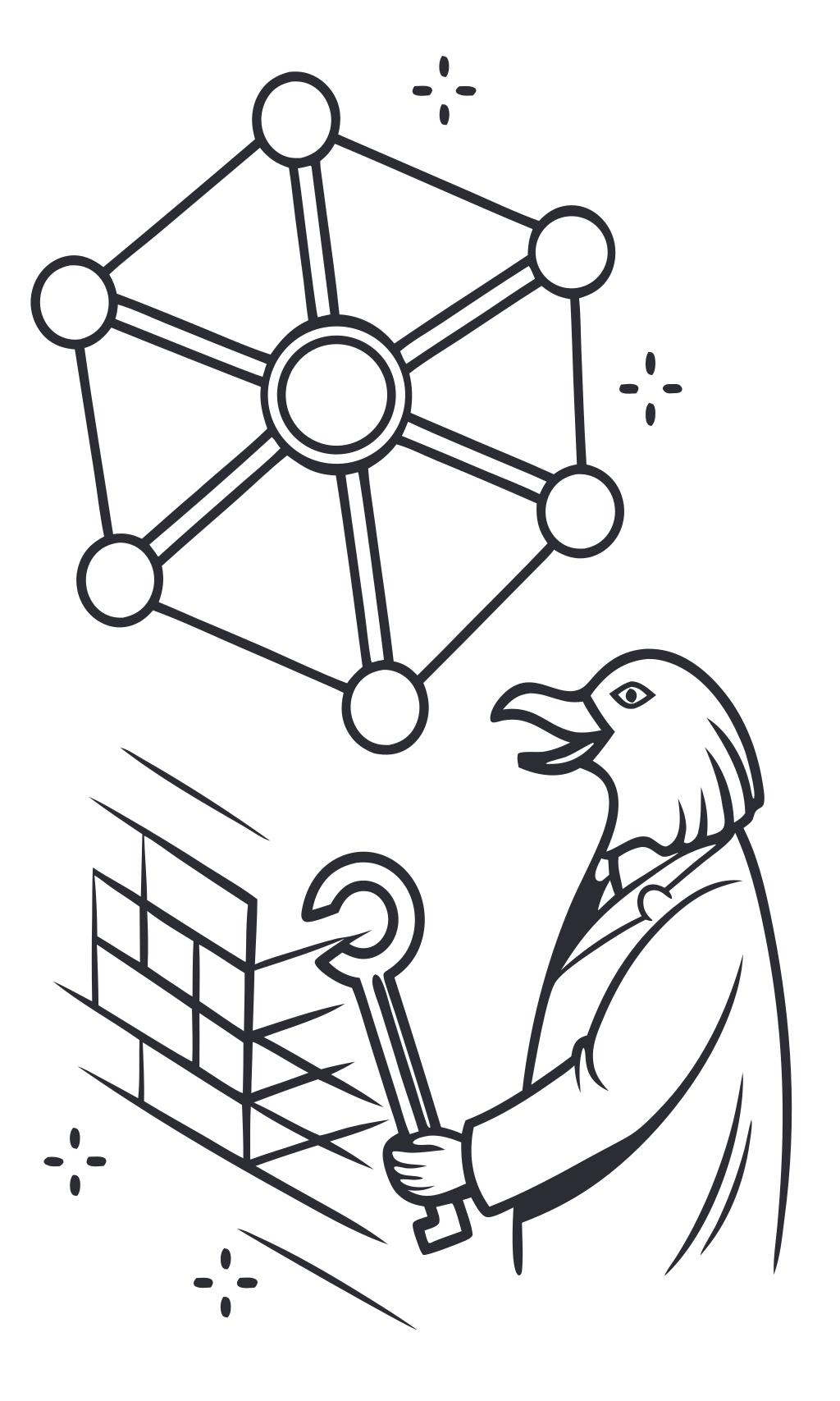
Hash Map 的核心在於:把鍵轉成陣列索引。流程如下:
- 將鍵(如字串)餵給 hash function,得到一個整數 hash code。
- 將 hash code 經由 壓縮函數(compression) 取模至
[0, array_size),得到合法索引。
設計考量
- 輸入:通常為字串或任意型別(會先轉為位元組/整數序列)。
- 輸出:陣列索引(整數)。
- 效率:計算必須簡單快速(否則會拖累整體效能)。
- 不可逆:雜湊輸出資訊量少於輸入,本質不可逆。
小提醒:壓縮函數常用「
hash_code % array_size」。良好的 hash function 能讓鍵分布均勻,減少碰撞。

碰撞(Collision)與解法
碰撞:不同鍵可能被映射到相同索引。這是無可避免的,因此需要策略處理。
1) Separate Chaining(分離鏈結)
- 陣列每格放的不是單一值,而是容器(常見:鏈結串列)。
- 同索引的多個鍵值對,串在同一條鏈上。
- 優點:插入簡單,陣列不用搬動。
- 缺點:碰撞多時,鏈會變長,查找成本接近 O(n)。
2) Open Addressing(開放定址)
- 仍只用陣列;若索引衝突,就**探測(Probing)**下一個位置直到找到空位。
- Linear Probing:每次往後 +1(或固定步長)。
- Quadratic Probing:依序 +1、+4、+9…(平方數),較能減緩群聚(clustering)。
多數教材都會介紹以上兩種。工業界實作還會考慮負載因子(load factor)、動態擴容(rehash & resize)等。
Python 與 Hash Map
實務上,Python 內建的 dict 就是高度最佳化的 Hash Table。
為了理解原理,下面示範Hash Map(以 list 模擬陣列,採 open addressing / linear probing)。
建構子:配置陣列
class HashMap:
    def __init__(self, array_size):
        self.array_size = array_size
        self.array = [None for _ in range(array_size)]
Hash 與 Compression
class HashMap:
    def __init__(self, array_size):
        self.array_size = array_size
        self.array = [None for _ in range(array_size)]

    def hash(self, key, count_collisions=0):
        key_bytes = key.encode()
        hash_code = sum(key_bytes)
        # 加上碰撞次數,支援 probing
        return hash_code + count_collisions

    def compressor(self, hash_code):
        return hash_code % self.array_size
指派(Setter):處理碰撞(Linear Probing)
- 陣列每格存 [key, value],以利檢查是否同鍵或不同鍵。
    def assign(self, key, value):
        array_index = self.compressor(self.hash(key))
        current = self.array[array_index]

        # 空位:直接放入
        if current is None:
            self.array[array_index] = [key, value]
            return

        # 同鍵:覆蓋
        if current[0] == key:
            self.array[array_index] = [key, value]
            return

        # 不同鍵:開放定址(線性探測)
        collisions = 1
        while True:
            new_index = self.compressor(self.hash(key, collisions))
            current = self.array[new_index]

            if current is None:
                self.array[new_index] = [key, value]
                return

            if current[0] == key:
                self.array[new_index] = [key, value]
                return

            collisions += 1
取值(Getter):同樣需探測
    def retrieve(self, key):
        array_index = self.compressor(self.hash(key))
        current = self.array[array_index]

        if current is None:
            return None
        if current[0] == key:
            return current[1]

        # 不同鍵:沿相同探測序列繼續找
        collisions = 1
        while True:
            new_index = self.compressor(self.hash(key, collisions))
            current = self.array[new_index]

            if current is None:
                return None
            if current[0] == key:
                return current[1]

            collisions += 1
提醒:若你要支援刪除,在 open addressing 中一般會使用 lazy deletion(標記刪除),避免破壞探測序列。
結語
在理想情況下,它能以近乎 O(1) 的時間完成插入、查找與刪除,成為快取、索引、會話管理等場景的首選結構。真正影響效能與穩定度的,往往不是語法,而是工程細節:雜湊函數的分布品質、碰撞處理策略(separate chaining / open addressing)、負載因子控制與動態擴容(rehash)等。理解這些設計抉擇,能讓你在實務系統中做出「快且穩」的資料結構決策。